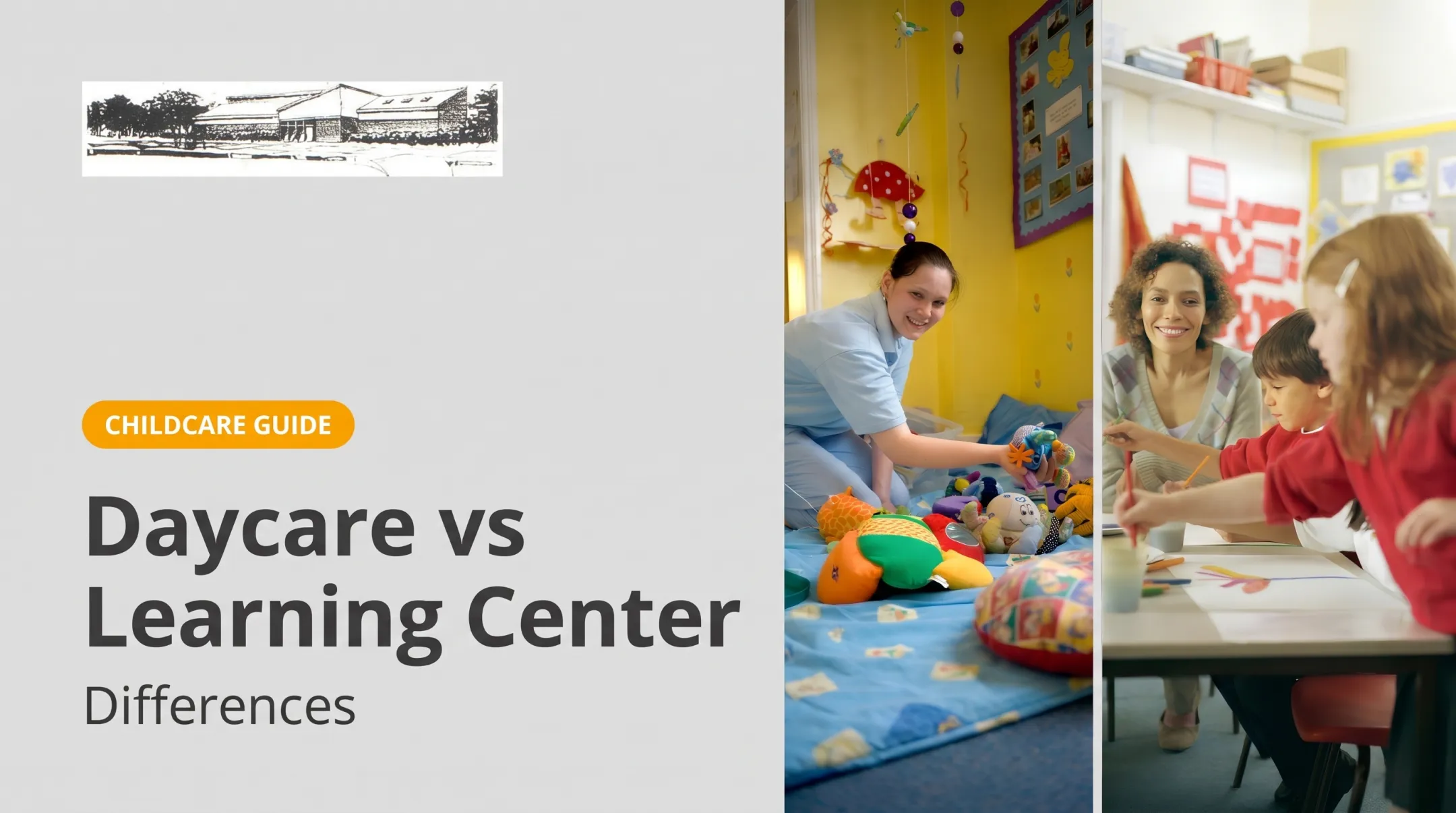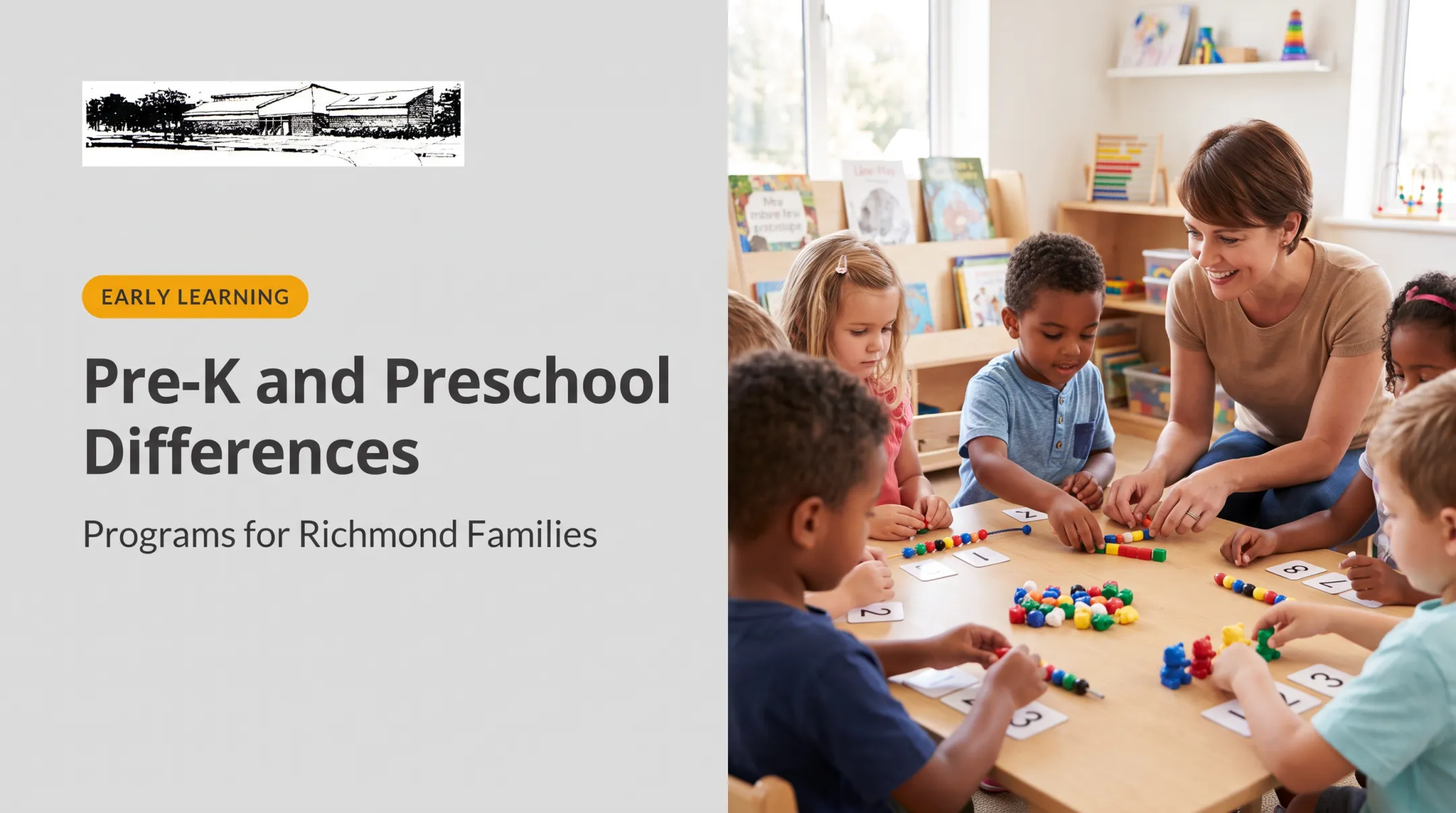

The choice affects daily coverage, a toddler's first regular separations, social development, and how ready your child is for preschool. According to Child Care Aware of America, toddler center care in Virginia averaged $16,380 a year in 2025, so the decision is financial too.
This guide compares the two options on purpose, age group, schedule, staffing, cost, and readiness, so you can choose by fit instead of by name.
Key Takeaways
- A 2s program is usually a structured classroom for two-year-olds; daycare usually means dependable care across a wider age range.
- 2s programs often run shorter sessions; daycare more often offers long hours, meals, and naps.
- Quality depends on staffing, interactions, and routines, not the label.
- Choose by readiness, required hours, curriculum, and total cost.
2s Program vs Daycare: Quick Comparison
"2s program" is not a standard licensing category. Licensing attaches to the provider, not the marketing label, so check each program's actual license and the ages it is approved to serve.
| 2s program | Daycare | |
|---|---|---|
| Purpose | Early learning, social growth, classroom routines, preschool preparation | Reliable supervision and care, plus age-appropriate activities, meals, rest |
| Age and groups | Mostly two-year-olds; cutoffs vary | Infants through school age; age-specific or mixed-age rooms |
| Schedule | May be a short morning, certain days, or school-year calendar | More often full-day, extended-hour, year-round |
| Routine | Planned stories, music, art, sensory play, movement | Free play, outdoor time, meals, naps, toileting support, learning |
| Cost items | Tuition by session length and days, fees, supplies, possible before/after care | Full-day tuition, meals, registration, closures, late-pickup fees |

Many providers blur the line. Starling Child Care, for example, lists a Two's Preschool and a Toddler Program separately, while also offering full weekday hours.
What Is a 2s Program?
A 2s program is a classroom designed around children who are about two years old. Names, age cutoffs, and enrollment rules vary by provider and state.
The aim is not formal academics. Toddlers build language, social-emotional, motor, self-help, and early problem-solving skills through play. The CDC's two-year milestones include combining two words, noticing when someone is upset, and kicking a ball. These classrooms support that kind of growth.
A typical routine may include:
- Arrival and free exploration
- Circle time with stories and music
- Art, sensory play, and dramatic play
- Outdoor movement
- Snack, rest, and transitions
Confirm the real routine with the provider. At Starling, the Two's Preschool has a dedicated classroom, a child-sized bathroom, and a toddler playground right outside. Hands-on activities focus on cognitive, physical, and social development.
Gradual Separation and Developmental Readiness
For many toddlers, a 2s program is the first regular separation from a parent. Short sessions, predictable routines, and familiar caregivers ease that transition. Starling suggests one hour on day one, two hours on day two, then a half day. Staff call a parent if a child keeps crying after being comforted.
Readiness differs by child:
- Potty training: The AAP says the average US start falls between ages 2 and 3. Virginia-licensed centers can't require toilet training before enrollment, so ask what support exists.
- Separation: Goodbyes go easier with a brief, consistent routine and practice beforehand.
- Naps, eating, language: Ask how the program adapts to each.
Who a 2s Program Suits
- Families wanting a first classroom experience and regular time with peers
- Parents who want structure before a longer preschool schedule
Working parents should confirm session length, the operating calendar, transportation, and whether extended care is available.
What Is Daycare?
Daycare is a broad term for care that covers children while parents work, study, or handle other responsibilities. It can be center-based or a family child care home in a provider's residence.
Typical services include extended weekday hours, meals and snacks, naps, diapering, toileting help, outdoor play, and care when school-based programs are closed.
Quality daycare can still be highly structured. Good programs offer learning centers, language-rich conversation, creative activities, and early math and literacy. Starling's learning centers cover reading, writing, art, science, math, dramatic play, blocks, and sensory activities. Its Building Blocks curriculum is built on 38 development and learning objectives.
Quality Factors to Examine
Ask every provider about:
- Licensing and background checks
- Staff training and turnover
- Child-to-caregiver ratios and maximum group size
- Emergency procedures
- How they communicate with families
Know which kind of number you're hearing. Virginia law allows 1:8 with groups up to 24 for two-year-olds in licensed centers. NAEYC's accreditation guide uses 1:6 with a maximum of 12. Caring for Our Children recommends 1:4 for toddlers. Law, accreditation benchmark, and expert recommendation are different things.
Turnover matters too. An ACF workforce snapshot found 35% of centers serving only ages 0-3 had high staff turnover. Stable relationships matter for two-year-olds, so watch whether adults speak respectfully, respond to emotions, supervise actively, and adapt activities.

Who Daycare Suits
Parents needing full-day care, early drop-off, late pickup, or year-round enrollment
Families wanting continuity from infancy through preschool
Families who need meals, naps, and toileting help built into the workday
Age-specific and mixed-age rooms can both work when staffing, group size, and activities suit toddlers.
Before you enroll, add up the full cost: registration, meals, supplies, extended hours, summer care, transportation, and separate preschool fees. Starling, for example, charges $10 plus $1 per minute per child for pickup after closing.
2s Program vs Daycare: What Is Better?
Neither wins outright. Research doesn't show a structured 2s program beats daycare for all two-year-olds. The evidence is observational, and family characteristics tend to predict outcomes more strongly than child care features.
Situational Recommendations
- Lean toward a 2s program if you want a short, structured introduction to group learning and your child is ready for regular separation.
- Lean toward daycare if you need longer coverage, meals, naps, or continuous care.
- Consider a combined option if you want 2s-style structure inside full-day coverage.

Tour and Enrollment Checklist
Ask about:
- Daily schedule and curriculum
- Ratios, group size, and staff qualifications
- Outdoor play, meals, naps, and toileting
- Illness policy and closures
- Parent communication
- Fees and financial assistance
- How they handle transitions and developmental concerns
A Practical Example
Picture a family with a two-year-old and one parent working until 5:30 PM. A half-day 2s class sounds appealing, but it leaves a gap. The deciding factor is hours. A program offering a 2s classroom within full-day care solves both.
Talk to Starling Child Care
Richmond and Henrico families can ask Starling Child Care about toddler and preschool options, schedules, transition support, and availability. Starling is Virginia-licensed and NAEYC-accredited, open weekdays from 6:30 AM to 6:30 PM. Call (804) 346-2000 or email enrollment@starlingchildcare.com. Income-based financial assistance is available.
Conclusion
A 2s program focuses on a short, age-specific learning block. Daycare usually covers a broader day and a wider age mix. In practice, many strong programs blend both.
Visit each setting and watch how caregivers interact with children. Compare the full schedule and cost, then choose the arrangement that supports your child's development and fits your family's day.
The Virginia Preschool Initiative (VPI) Is Worth Knowing Early
The cost picture changes the year a child turns four. The Virginia Preschool Initiative (VPI) is Virginia's state-funded preschool program for eligible four-year-olds, and qualifying families pay nothing for the seat. Eligibility commonly considers household income at or below 200% of the federal poverty level, confirmed through documentation rather than assumed. Because openings and deadlines are set locally, families tend to gather paperwork well before their child ages in. Starling Child Care serves Henrico County and the Richmond area, with infant and toddler rooms alongside the Henrico County Preschool Program for children three or four as of September 30. Ask now how today's placement connects to VPI later, and which assistance pathways apply meanwhile.
Frequently Asked Questions
Should a 2-year-old go to daycare?
It can be a good fit when care is safe, responsive, and developmentally appropriate, and it matches your schedule. It's not required. Your child's needs and the program's quality matter most.
Is it better to get a nanny or daycare?
A nanny offers one-on-one care and flexibility; daycare offers group socialization and built-in backup. Care.com's 2026 posted toddler rates averaged $936 weekly for nannies versus $308 for daycare. Nanny care is also usually unregulated.
Is a preschool the same as a daycare?
Not always. Preschool signals school readiness and is often part-time; daycare signals broader care. Many providers offer both, and some preschools start at age 2.
What is the difference between a 2s program and daycare?
A 2s program targets two-year-olds with structured learning and often shorter sessions. Daycare spans more ages and often offers full-day coverage. Individual programs may combine features.
How do I choose between a 2s program and daycare?
Match your child's readiness and needs to your hours, budget, calendar, and transportation. Then compare each provider's licensing, staffing, communication, and daily routine.