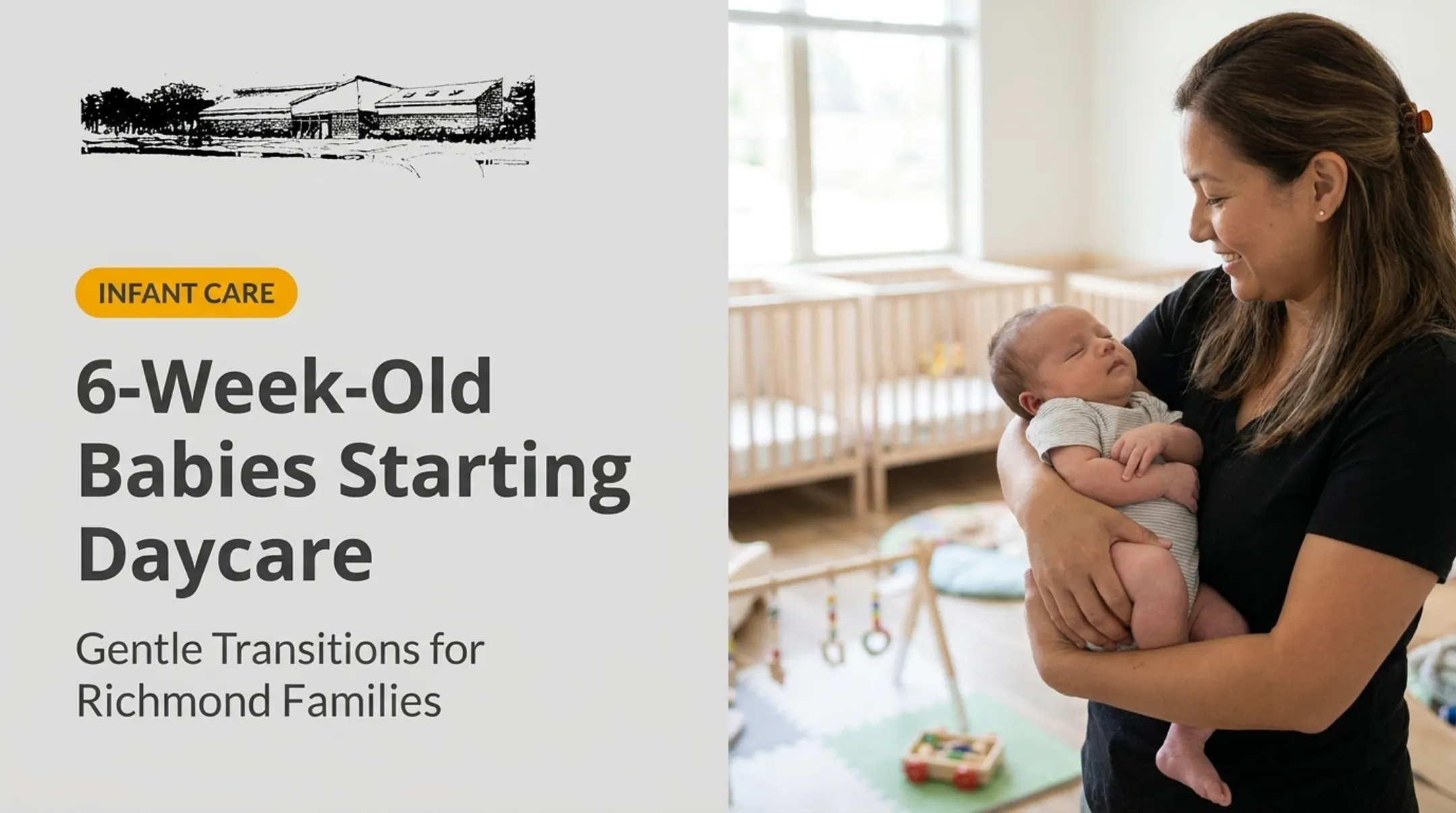

The best interview questions reveal how a provider handles ordinary moments: a baby who refuses a bottle, a staff member who calls in sick, a crying infant at 4:45 p.m. Amenities and activity lists tell you far less.
Use this guide on a phone call and again on the tour. Get important answers in writing, and watch how caregivers treat the babies. Examples reference Virginia rules and Richmond-area practice, so check your own state's requirements.
Key Takeaways
- Verify the license, safe-sleep practices, supervision, emergency plans, and real infant staffing.
- Ask how staff will follow your baby's feeding, sleep, diapering, and soothing needs.
- Request written policies, then compare them with what you see in the infant room.
- Treat evasive answers, closed classrooms, or pressure to enroll as reasons to dig deeper.
Questions About Safety, Licensing, and Infant Staffing
What current license, inspection records, and quality credentials can I review?
Ask to see the current license. Then check it yourself: Virginia's Child Care VA search lets you open a center's record and inspection dates. In other states, use the state licensing database.
Licensing and accreditation are different things. Licensing sets enforceable minimum standards. Accreditation, such as NAEYC's, is a separate voluntary assessment with tiers, and not every tier requires an onsite visit. Ask which status the provider holds and when it was awarded.
Starling Child Care in Henrico, for example, states that it holds a Commonwealth of Virginia child care license and NAEYC accreditation. Confirm any provider's current credentials independently, including Starling's.
What are the actual caregiver-to-infant ratios and group sizes throughout the day?
Ask for the ratio and maximum group size in the infant room, including these moments:
- Opening and closing
- Meals and staff breaks
- Staff absences
- Busy pickup periods
Standards vary by source. Virginia requires 1:4 with a maximum group of 12 for children under 16 months. NAEYC lists 1:4 with a maximum of 8.
Caring for Our Children, the national health and safety standards, recommends 1:3 with a maximum of 6 through 12 months. Always ask which standard a number refers to.
Then ask the key question: is that your usual daily practice, or just the legal maximum?

How are caregivers screened, trained, and supervised?
Ask about:
- Background checks (fingerprint and child-abuse registry)
- Infant-specific experience
- Pediatric CPR and first aid
- Safe-sleep and mandated-reporter training
- Ongoing education
- Supervision of substitutes
Virginia requires at least one CPR-trained staff member in each classroom and two on the premises. Direct-care staff also need 16 additional training hours each year.
Ask how new caregivers are introduced and whether your baby will have consistent primary caregivers. Familiar adults learn a baby's cues faster, and trust builds with repetition.
What are your emergency, security, and injury procedures?
Cover these topics:
- Secure entry, visitor access, and ID checks
- Authorized pickup and headcounts
- Fire, severe-weather, and lockdown plans
- Evacuation locations and family reunification
- How parents hear about injuries or a child who can't be found
Ask how often drills happen and whether you can get the plan in writing. Virginia requires monthly evacuation drills, twice-yearly shelter-in-place drills, and an annual lockdown drill.
How do you prevent illness and maintain a clean infant environment?
Ask about:
- Handwashing and diaper-changing steps
- Sanitizing toys and surfaces, laundering, and ventilation
- Sick-child exclusion policy and outbreak communication
- Immunization record requirements
- How the center protects infants too young to be vaccinated
These are hygiene policies, not medical advice. Take individual health concerns to your pediatrician.
Questions About Daily Infant Care and Development
What does a typical day look like for an infant in this room?
Ask the provider to walk you through arrival, feeding, diapering, naps, floor play, outdoor or sensory time, and pickup. Babies don't run on a rigid group clock, so ask how the center balances routine with each baby's cues. Request the written or digital daily schedule, and ask to see the room your baby would actually use.
How do you handle breast milk, formula, bottles, and beginning solids?
Ask about labeling, storage, warming, preparation, feeding logs, paced feeding, and leftovers. The CDC says unfinished breast milk should be used within 2 hours after the feeding ends, then discarded. Prepared formula has different time limits, so a good provider knows both.
Also ask:
- Will staff follow my written feeding instructions?
- What happens when my baby refuses a bottle?
- Do staff recognize hunger and fullness cues, never forcing a finish?
- How do you prevent allergen cross-contact, and how are feeding incidents documented?
Solids typically begin around 6 months, once a baby is developmentally ready. You decide timing with the provider's support.
What are your infant sleep and safe-sleep procedures?
Ask where babies sleep, how sleep spaces are prepared, how staff monitor sleepers, and how naps are recorded. Compare the answers with the CDC's guidance: back to sleep for every sleep, on a firm, flat surface with a fitted sheet and no soft bedding or objects.

Virginia requires individual checks of sleeping infants every 15 to 20 minutes. Ask what happens when a baby:
- Only sleeps when held
- Takes a pacifier to settle
- Arrives overtired
How are diapering, hygiene, and personal supplies handled?
Ask who changes diapers, how often babies are checked, and how changes are logged. Then clarify:
- How staff handle diaper rash, cloth diapers, and prescribed creams
- Which supplies you bring, how items are labeled, and whether emergency extras stay on site
- How the center protects privacy during changes and keeps hygiene consistent
How do caregivers comfort, engage, and support each baby's development?
Ask what happens when a baby cries and can't be soothed, or needs one-on-one attention. Ask how caregivers build in:
- Floor play and supervised tummy time
- Talking, reading, and sensory activities
- Quiet rest when a baby needs a break
Virginia requires 30 minutes of tummy time daily for awake infants who can't turn over yet. Ask how caregivers learn each baby's temperament and how they share developmental concerns without making unsupported diagnoses.
Questions About Policies, Communication, and Enrollment
Is there a space for my baby, and what happens at the next classroom?
Ask about current availability, waitlist procedures, deadlines, minimum attendance, and start-date flexibility. Find out when babies move up, how the center notifies families, and whether tuition or schedules change. Get availability and the promised start date in writing, not as a verbal estimate.
What are the hours, closures, attendance rules, and late-pickup procedures?
Confirm operating hours, holidays, staff training and weather closures, vacation policies, and what happens if you're delayed. Also ask about part-time care, schedule changes, and backup care. Compare the answers with your real commute and work hours, especially if your schedule will shift when leave ends.
What does care cost, and what fees or contract terms should I understand?
Ask for the full picture:
- Tuition, registration, deposits, supplies, and meals
- Late and returned-payment fees
- Charges during absences or closures
- Contract length and withdrawal notice
- Refund rules, sibling discounts, and financial assistance
Virginia's average infant center price is about $17,264 a year, per Child Care Aware, a statewide figure rather than a local quote. Ask for the parent handbook and enrollment agreement so you can read the fine print at home.
At Starling, for instance, fixed weekly tuition is due whether or not a child attends, and withdrawal requires two weeks' written notice. Ask any provider for equivalent terms.
How will I receive updates about my baby?
Confirm whether daily updates cover feeding, diapering, naps, mood, and activities, and whether photos and incident reports are included. Clarify how fast you'll be called about fever, injury, medication, or an allergic reaction. Find out whether you can talk directly with the primary caregiver, how concerns escalate, and whether conferences are offered.
Virginia requires accessible daily infant records covering sleep, food, bowel movements, and milestones.
Can parents visit, breastfeed, and participate in care decisions?
Virginia requires centers to admit a custodial parent while the child is in attendance. Ask about visiting, observing, and breastfeeding or pumping onsite. Clarify how comfort items, cultural practices, and communication preferences are handled. A good provider explains how it partners with families while protecting routines, privacy, and security.
How to Evaluate Answers During the Tour
Watch the room, not just the building
Visit while the center is operating normally, and ask to see the room your baby would use. Observe:
- Do caregivers respond calmly to crying and talk with babies?
- Do they notice individual cues and stay at the babies' level?
- How do cleanliness, noise, odors, and lighting feel?
- Are sleep spaces clear, doors secure, supplies within reach?
The room should feel orderly without looking staged.
Press on vague answers
Ask for examples. How did a caregiver handle a recent unsettled baby? What happens when the usual caregiver is out?
Request the paperwork that backs up what you heard:
- Written policies
- A sample daily report
- Emergency procedures
- Licensing information
After each tour, jot notes under the same headings: safety, responsiveness, routine, communication, cost, and fit.
Know the red flags
- Reluctance to show the infant room
- Evasive answers on ratios or background checks
- Missing or outdated documentation
- Propped bottles, forced bottle finishing, or soft items in cribs
- Poor hygiene or disengaged caregivers
- Pressure to sign immediately
One rough moment needs context. Repeated gaps between what staff say and what you see do not. To verify a concern, contact Virginia's licensing office at 833-778-0204, or your state's equivalent. Suspected abuse goes to the Virginia hotline at 800-552-7096.
How to Compare Providers and Prepare for the First Day
Build a shortlist from non-negotiables
Decide your priorities before touring:
- Safe sleep
- Feeding flexibility
- Caregiver consistency
- Hours
- Communication
- Cost
Separate deal-breakers from preferences, and ask every provider the same questions so the shiniest facility doesn't win by default. Call references if offered, and confirm that key promises appear in the contract.
Gather documents, supplies, and instructions
Typical requirements include:
- Health and immunization records
- Emergency contacts and authorized pickup names
- Feeding instructions and medication permissions
- Labeled bottles, diapers, and spare clothes
- An allowed comfort item
Write a one-page baby profile: routines, cues, allergies, soothing methods, sleep habits, and how you prefer to be contacted. Ask which documents are due before the start date.
Ease into care
Practice the morning routine at home and introduce bottles early. Ask whether a short first visit or gradual start is possible. Starling, for example, suggests one hour on day one, two on day two, then a half day.

Keep goodbyes brief and predictable, as the American Academy of Pediatrics advises. Review daily updates and revise your written instructions as your baby changes.
The Virginia Preschool Initiative (VPI) Comes Later, Plan for It Now
The year your child turns four can cost far less than the years before it. The Virginia Preschool Initiative (VPI) funds preschool for eligible four-year-olds across Virginia, and qualifying families pay nothing for the seat. Eligibility commonly considers household income at or below 200% of the federal poverty level and is confirmed through documentation. VPI runs on the school-year calendar, so summer and break-week care stays a separate cost. Starling Child Care serves Henrico County and the Richmond area and offers the Henrico County Preschool Program alongside its infant and toddler rooms. Ask the enrollment team what VPI eligibility will involve and which assistance pathways apply meanwhile.
Frequently Asked Questions
What questions to ask at a daycare for infants?
Prioritize licensing, infant staffing, safe sleep, feeding, diapering, illness policies, and emergency procedures. Then cover communication, availability, and total cost.
How to prepare for infant daycare?
Submit health and enrollment documents, label all supplies, and write down feeding and soothing instructions. Confirm emergency contacts and plan a consistent drop-off routine.
What makes a good daycare?
Safe, hygienic practices, qualified and responsive caregivers, clear policies, and developmentally appropriate infant care. Add open communication and a welcoming partnership with families.
What is a good caregiver-to-infant ratio at daycare?
Ratios depend on the child's age and your state. Compare current licensing requirements with the provider's actual daily staffing and coverage plan.
What should I look for when touring an infant daycare?
Watch the actual infant room: caregiver responsiveness, safe sleep setup, cleanliness, supervision, and security. Note whether staff answer questions openly.
What are red flags when choosing an infant daycare?
Evasive answers, closed classrooms, unsafe sleep or hygiene, unclear staffing, and missing documents. Disengaged caregivers and pressure to enroll without reading policies are warning signs too.