Play isn't a break from learning in preschool. It's how children practice communication, problem-solving, movement, creativity, self-regulation, and friendship. This article covers the types of play, what each builds, activities for home and classroom, and how families can spot a high-quality play-based preschool.
Key Takeaways
- Play can be child-led, adult-guided, or rule-based, and still be purposeful.
- Pretend, building, sensory, creative, physical, and musical play each build different skills.
- Adults help most by observing, asking open-ended questions, and offering just enough support.
- A strong preschool balances free play with routines, intentional teaching, safety, and inclusion.
What Is Preschool Play-Based Learning?
Play-based learning is an approach where children actively explore, make choices, and build understanding through enjoyable, meaningful experiences instead of passively completing tasks.
Free Play, Guided Play, and Intentional Teaching
NAEYC's developmentally appropriate practice statement describes a continuum:
- Free play: children choose and direct the activity.
- Guided play: an adult sets up materials or asks questions while the child keeps control.
- Structured games: simple rules, such as turn-taking board games.
- Direct instruction: an adult teaches a specific skill, ideally in a playful way.
Good classrooms use all four at the right moments. Neither free play alone nor heavy direct instruction matches that guidance.
What Makes Play Educational?
Productive play has a few common features: engagement, choice, imagination, social interaction, repetition, and experimentation. The process matters more than a perfect finished product.
One activity can serve many goals. A pretend grocery store builds vocabulary, counting, turn-taking, planning, and early writing (shopping lists, price signs) all at once. At Starling Child Care, the dramatic-play center may become that grocery store, and a child in the cashier role practices the same mix of language, math, and early writing.
Is play less rigorous than worksheets? Not when teachers plan it. A 2022 meta-analysis of guided-play studies found advantages over direct instruction for early math and shape knowledge. The studies covered ages 1 to 8. The review did not compare play with worksheets, so the takeaway is focused: well-planned guided play can support specific learning goals.

What Types of Play Do Preschoolers Do?
These categories overlap. A child building a pretend bus station is doing constructive and dramatic play at once.
Dramatic and Pretend Play
Dress-up, family roles, doctor's offices, stores, and restaurants let children take on roles and use objects as stand-ins for other things. This builds language, empathy, imagination, and negotiation. ("You be the nurse. I'll be the patient.")
Constructive, Creative, and Sensory Play
Blocks, puzzles, loose parts, drawing, painting, playdough, sand, water, and collage encourage planning, fine motor control, and experimentation. Starling's sensory center, for example, uses sand, water, potting soil, and seashells so children notice how things look, feel, and smell.
Physical, Musical, and Rules-Based Play
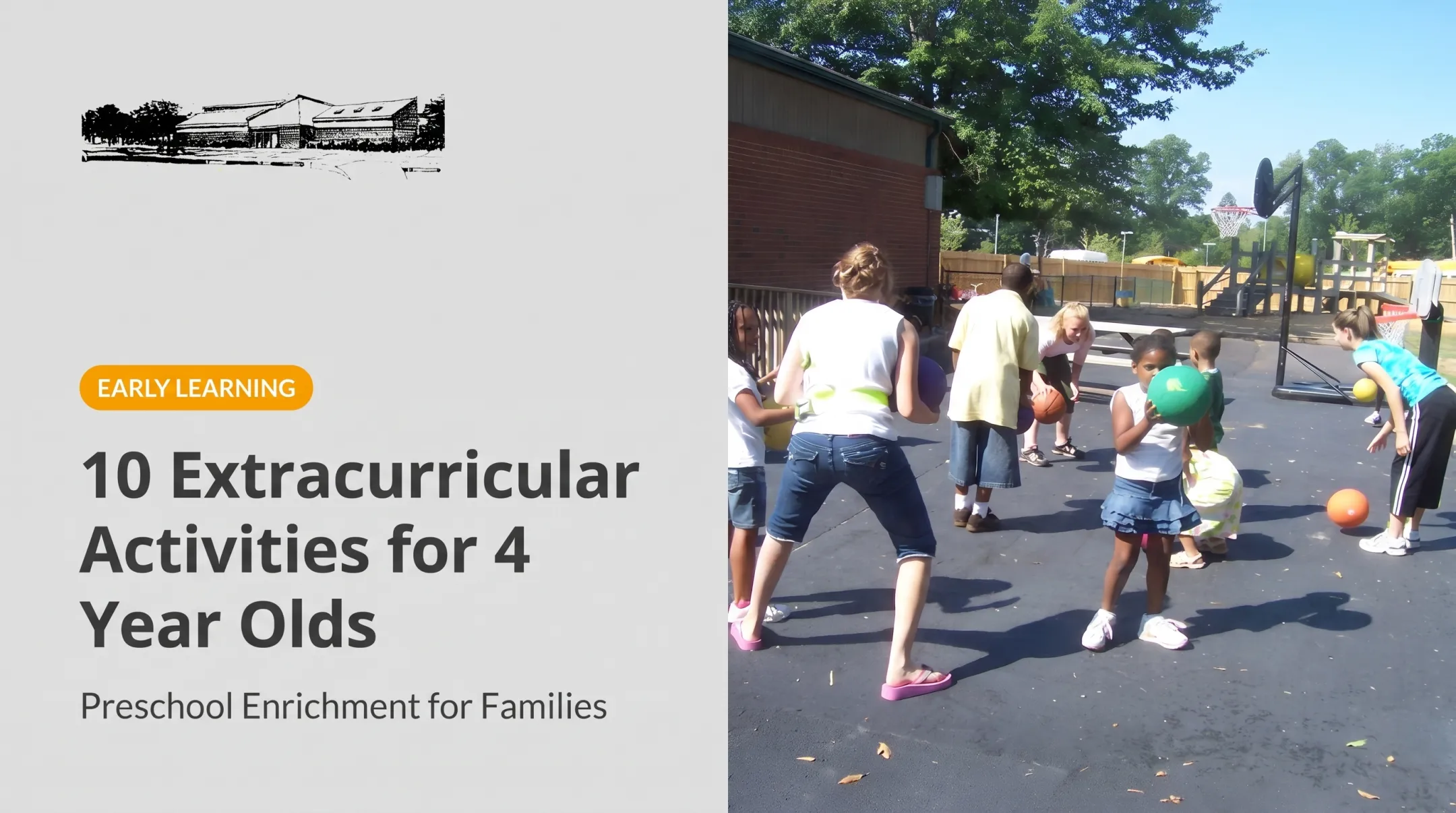
Running, climbing, dancing, obstacle courses, rhymes, and simple games build coordination and cooperation. The CDC advises that children ages 3 to 5 be physically active throughout the day.
Children vary here. One child loves a board game with rules, while another isn't ready to wait a turn yet. Both are normal.
How Play Supports Preschool Learning and Development
Language, Literacy, and Communication
Pretend play, storytelling, songs, rhymes, and puppets build vocabulary, listening skills, and confidence. NAEYC notes that dramatic play also strengthens communication and narrative structure.
Adults can extend language without quizzing:
- Model a new word: "That bridge looks sturdy."
- Retell the child's story back to them.
- Wonder aloud: "What might happen next?"
Early Math, Science, and Spatial Reasoning
Hands-on play builds early math and science thinking:
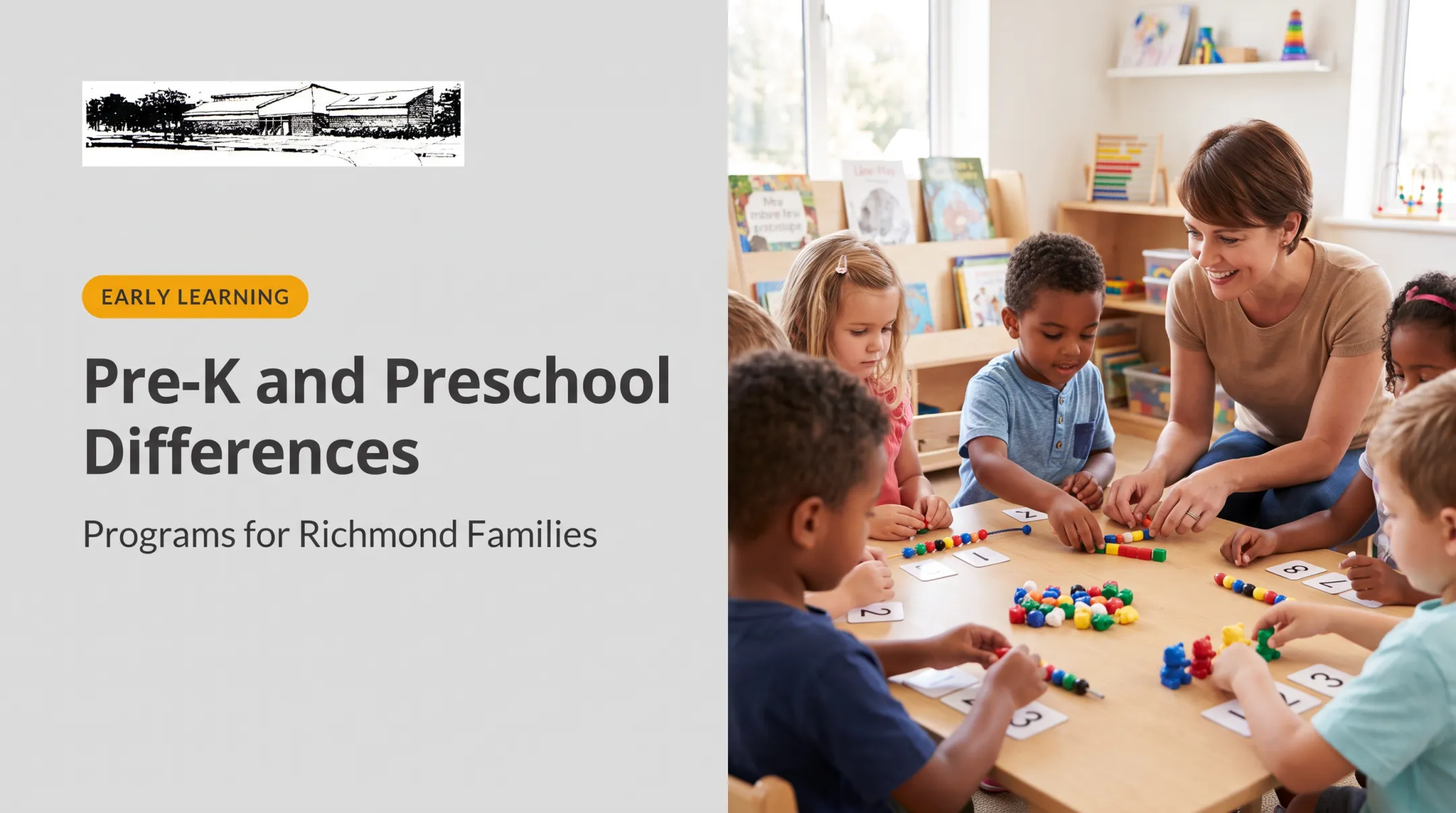
- Sorting, counting, and patterns support numeracy
- Measuring, ramps, and water play spark prediction and inquiry
- Block building develops spatial language and problem-solving
Head Start notes that blocks prompt spatial-position language, counting, and problem-solving. Try questions such as "How could we make the tower taller?" or "What do you notice about which objects sink?"
Social-Emotional Development and Executive Function
Collaborative play gives children practice with skills they use every day in preschool:
- Sharing ideas and taking turns
- Handling frustration when plans change
- Negotiating rules and cooperating with peers
The American Academy of Pediatrics describes peer play as practice in these social skills. Pretend roles also build empathy and emotional vocabulary.
Physical Development, Creativity, and Kindergarten Readiness
Fine and gross motor play prepares children for classroom tasks:
- Cutting, drawing, threading, and playdough strengthen hand control
- Climbing and balancing build coordination and body awareness
Readiness is broader than letters and numbers. Virginia's readiness program looks at early literacy, math, self-regulation, and social skills. Listening, communicating needs, managing emotions, persistence, and curiosity all count.
Timelines vary. CDC milestone checklists aren't pass/fail tests. If you have a concern about a child's development, talk with a pediatrician.

How Adults Can Extend Learning Through Play
Prepare an Inviting, Open-Ended Environment
Set up accessible areas with books, writing materials, blocks, art supplies, props, puzzles, and sensory materials. Loose parts (open-ended items children use in many ways) work especially well.
Expensive toys aren't necessary. Rotate a few materials, add real-world objects, and display children's work to renew interest.
Observe, Respond, and Scaffold
Watch first. Then comment, model, or ask an open-ended question without taking over. Useful prompts:
- "Tell me about your plan."
- "What could you try next?"
- "How can we make room for both ideas?"
Connect Play to Interests and Document Learning
Follow children's questions into short investigations, add related books, and document with notes, photos, or work samples.
Starling teachers use anecdotal records and formal assessments to check progress against learning goals. Starling classrooms include learning centers, three age-appropriate outdoor spaces, and a Children's Garden. Those features are one example, not a requirement for every preschool.
Support Safety, Access, and Participation
- Water: keep an adult within arm's reach, with no distractions, per the CDC.
- Choking: federal child-care standards advise against offering children under 4 foods such as hot dogs, popcorn, apples, and grapes.
- Art supplies: choose non-toxic, age-appropriate materials and supervise powders and dusty items.
- Allergies: have a plan for food allergies.
Inclusion supports help children with disabilities, language differences, or sensory needs:
- Visual directions and adapted tools
- Quiet spaces and peer support
- Multiple ways to participate
Preschool Play and Learning Ideas for Home and Classroom
Language and Literacy Play
- Read a favorite book and change the ending.
- Retell a story with stuffed animals.
- Make up rhymes or hunt for beginning sounds.
- Make labels for a pretend shop.
- Spell a child's name with magnetic letters.
Perfect handwriting and independent reading aren't the goal. Enjoying language is.
Math, Building, and STEM Play
- Sort household objects by color, size, or shape.
- Compare tower heights or build a bridge for toy animals.
- Test which materials roll, balance, or float.
Let children predict, test, revise, and describe what happened. Curiosity beats the "right" answer.
Dramatic Play That Builds Real-World Understanding
Set up a grocery store, restaurant, clinic, post office, or construction site with boxes, paper, recycled containers, fabric, and pretend money.
Along the way, children practice signs, lists, counting, sequencing, and cooperation.
Art, Sensory, and Fine-Motor Exploration
Offer open-ended materials such as:
- Playdough
- Paper tearing and gluing
- Different paint tools
- Large beads for threading
- Cup-to-cup water transfer
Choose process art, where children experiment rather than copy a model. NAEYC's process art guidance supports open-ended, choice-driven art. Check materials for allergies and safety.
Outdoor Movement and Nature Play
Try activities like:
- Obstacle courses and ball games
- Dancing and sidewalk chalk
- Leaf and rock sorting
- Gardening and insect watching
These build balance, stamina, vocabulary, observation skills, and care for nature.
Choosing a Play-Based Preschool
Look for:
- Warm, frequent adult-child interactions
- Accessible, varied materials
- A mix of child-led and guided experiences
- Daily outdoor time
- Developmentally appropriate expectations
- Safe routines and inclusive practices
- Clear communication with families
You can check a Virginia provider's license and inspection reports through the state's child care finder, and ask which NAEYC accreditation term applies. Accreditation describes program standards, not a guaranteed experience for any one child.

Richmond-area and Henrico families are welcome to learn more about Starling Child Care's preschool environment. Starling holds a Commonwealth of Virginia child care license and NAEYC accreditation.
Before You Compare Tuition: the Virginia Preschool Initiative (VPI)
A funded seat changes what you are actually comparing. The Virginia Preschool Initiative (VPI) is Virginia's state-funded preschool program for eligible four-year-olds, offered at no cost to households that qualify. Income at or below 200% of the federal poverty level is a common threshold, weighed alongside other factors, and eligibility is confirmed with documentation rather than assumed. VPI generally runs on the school-year calendar, so holiday and summer coverage is planned and paid for separately. Starling Child Care serves Henrico County and the Richmond area and offers the Henrico County Preschool Program for children who are three or four as of September 30. Ask the enrollment team which route applies before you shortlist on price alone.
Frequently Asked Questions
What should I teach my preschooler?
Focus on language, early literacy, math concepts, coordination, social-emotional skills, independence, and curiosity. Everyday play works better than formal academic pressure.
What type of play do preschoolers do?
Pretend, constructive, sensory, creative, physical, outdoor, musical, social, and simple rules-based play. Interests and participation vary from child to child.
How does play-based learning prepare children for kindergarten?
Play builds communication, self-regulation, cooperation, motor skills, persistence, early literacy, and math thinking. It also builds comfort participating in a group.
How can I support my preschooler's learning through play at home?
Offer simple materials, read together, join pretend play, get outside, and ask open-ended questions. Encourage rather than constantly correct.
Is free play enough for preschool learning?
Free play is valuable, but NAEYC notes it may not meet every specific learning goal alone. It works best with caring adult interaction, intentional materials, routines, and some guided experiences.
What should I look for in a play-based preschool?
Look for strong teacher-child relationships, safe and inclusive spaces, varied learning centers, outdoor time, realistic expectations, and family communication. Teachers should also be able to explain how play supports learning.