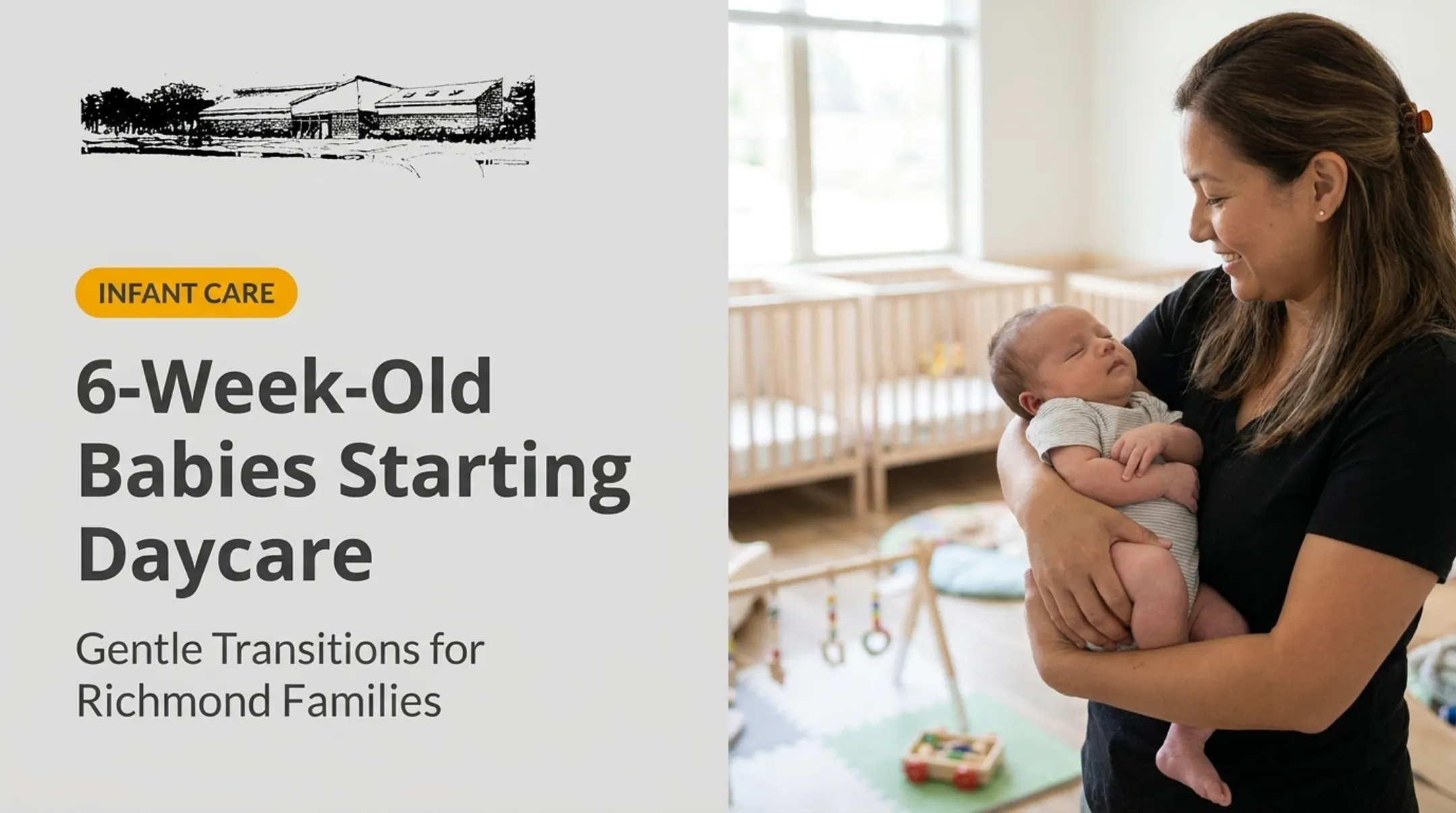
Families in the U.S. face a wide price range. Childcare Aware of America puts the average annual price of care at $13,184 in its 2025 price analysis. Virginia families pay more for centers: $17,264 for infants and $16,380 for toddlers.
This guide covers centers, family childcare homes, nannies, nanny shares, relatives and school-age programs. It then gives you a checklist for evaluating providers and planning for disruptions.
Key Takeaways
- Match the care model to your child's age, real work hours, commute and budget.
- Verify licensing, ratios, safety rules and communication before you enroll.
- Get the full fee schedule in writing, including late fees and closure policies.
- Build a backup plan for illness, closures and work surprises before you need it.
Daycare Options for Working Moms
Center-based daycare
Centers offer age-grouped classrooms, multiple caregivers, set routines and group socialization. Coverage doesn't hinge on one person being healthy that day.
Tradeoffs are real:
- Fixed operating hours and holiday or weather closures
- Larger groups than a home setting
- A commute to the center
- Strict illness and pickup policies
Virginia sets minimum ratios for centers. Infants under 16 months need at least 1 staff member per 4 children, with groups capped at 12. Check the current Virginia ratio rule for older age groups.
In the Richmond and Henrico area, Starling Child Care is one example. It is Virginia-licensed, holds NAEYC accreditation (granted in 2007), and has served the area since 1995. It runs infant, toddler, preschool, after-school and summer programs, with weekday hours Monday-Friday 6:30 a.m. to 6:30 p.m. Confirm current availability, tuition and age-specific openings directly.
Family childcare homes
Care happens in a caregiver's residence, usually with a smaller group and a home-like feel. Parents who want a consistent adult and a quieter setting often prefer it.
Ask about:
- Licensing or voluntary registration status
- Adult-to-child ratios
- Substitute coverage when the provider is sick or on vacation
- Emergency procedures and transportation
Virginia requires a license when a home cares for 5 to 12 children, not counting the provider's own. Care where every child is related to the provider by blood or marriage is not required to be licensed.
Nannies and nanny shares
A nanny gives your child individualized attention at home, flexible hours and sibling care in one arrangement. The tradeoff is that you become an employer.
Under IRS rules, nannies are generally household employees. For 2026, Social Security and Medicare taxes apply once cash wages reach $3,000. You'll also need an employment agreement, payroll and a backup plan for the nanny's sick days.

A nanny share splits the nanny between two families. Agree in advance on:
- Location and schedule
- Cost split
- Household rules
- Sick-child policy and transportation
- How you'll settle disagreements
Relatives, friends and cooperatives
Grandparents, trusted friends, babysitting swaps and parent co-ops can supplement paid care or serve as the main arrangement. Put the schedule, boundaries and emergency contacts in writing, even with family.
Informal care still needs a plan for illness, holidays and what happens if the arrangement stops working.
Preschool, after-school and summer programs
For older children, preschool, school pickup, after-school care and summer camp fill the gaps around the school day. Check the school calendar, transportation, homework support and coverage during breaks.
Consider whether one provider can cover several stages, such as preschool, then after-school, then summer. Still evaluate each program on its own.
How to Choose the Right Daycare
Start with your family's practical requirements
Write a short decision list:
- Child's age and care needs
- Required start date
- Work hours, commute, earliest drop-off and latest pickup
- School transportation
- Meals, naps and feeding
- Preferred learning environment
Then split it into non-negotiables and preferences. A beautiful classroom doesn't help if it closes 30 minutes before you can get there.
Check licensing, accreditation, safety and staffing
Verify the license and inspection history through Virginia's Search for Child Care tool. Select an inspection date to see any violations. Check NAEYC accreditation in its official directory.
Ask about:
- Background checks and staff training
- First aid and supervision
- Secure entry and authorized pickups
- Medication, allergies and sleep safety
- Incident reporting, severe weather and suspected illness
For safe sleep, the CDC says infants go on their backs for every sleep, naps included. Virginia's center rules require cribs for children under 12 months and ban bumper pads.

Evaluate the child's daily experience
Ask what a typical day looks like: reading, play, outdoor time, creative and sensory activities, rest, meals and toileting support. Ask how teachers document progress and raise concerns.
Infants and toddlers need responsive relationships as much as structured activities. Ask whether each child has a primary caregiver.
Tour the setting and assess communication
On the tour, notice:
- Whether children look supervised and engaged
- Whether rooms are clean and welcoming
- How staff speak to children and to each other
- Whether the space fits your child's age
Then ask about daily reports, photos, conferences, emergency communication, staff turnover, substitutes and how complaints are handled. Daily reports matter. A common parent complaint is updates that fade after the first month.
Compare enrollment terms and total cost
Request a written fee schedule covering:
- Tuition, registration, waitlist fees and deposits
- Meals, supplies and transportation
- Extended hours and late pickup
- Vacation, absence, holiday and withdrawal policies
Compare the full yearly commitment, not the weekly rate. Some centers charge a fixed weekly fee whether or not your child attends, and late pickup can run $1 per minute per child.

How to Make Daycare Work With Your Job and Family Routine
Prepare for the transition
Visit before the first day. Bring a familiar comfort item and keep goodbyes short and consistent. If the program allows it, start with partial days. One common model is one hour on day one, two on day two, then half days.
Returning from leave is emotional, and feelings can be mixed on the same day. There's no single adjustment timeline. ZERO TO THREE suggests sharing your baby's songs, stories and cues with caregivers.
Build an efficient morning and pickup system
- Label clothing and supplies
- Keep a spare set of essentials at the provider
- Prepare bottles or meals ahead
- Pack bags the night before
- Confirm what the provider supplies
Assign pickup duty in advance, keep authorized-pickup and emergency-contact forms current, and plan travel time around a realistic arrival, not the last possible minute.
Coordinate with the daycare and employer
Ask the provider how it communicates schedule changes, closures and early dismissals, and how much notice vacations require.
Then talk to your manager or HR about realistic flexibility: adjusted start times, occasional remote work, leave and backup-care benefits. When a disruption hits, give a short, solution-focused heads-up.
Plan for illness and other disruptions
Know the exclusion rules. The AAP says a child with respiratory symptoms and fever should not attend. Some providers require 24 hours without fever before return.
Decide in advance who takes the urgent pickup and how you'll split sick days. Keep a layered backup list: co-parent, relatives, friends, paid sitters and employer backup care.
Affordability and Backup Planning
Affordability depends on more than the weekly rate. Research these options and verify current rules with official sources:
- State or local childcare assistance, including Virginia's Child Care Subsidy Program
- Head Start and Early Head Start
- Provider scholarships and sibling discounts (Starling, for example, offers income-based reduced tuition)
- Employer benefits and dependent-care accounts
- Tax guidance from the IRS or a qualified professional
To calculate real cost, add:
- Tuition, registration, supplies and meals
- Transportation, commuting and occasional babysitting
- Late fees, missed work and summer or school-break coverage
Apply early where waitlists are common. Ask about future openings and flexible start dates.
Keep a written backup plan for:
- Closures, illness and weather days
- Emergencies and job changes
Where the Virginia Preschool Initiative (VPI) Fits
The year before kindergarten has its own funding route. The Virginia Preschool Initiative (VPI) provides state-funded preschool to eligible four-year-olds in Virginia at no cost to households that qualify. Income at or below 200% of the federal poverty level is a common threshold, and eligibility is established with documentation. For families with both a preschooler and a school-age child, a funded VPI seat can free up budget for wraparound care. VPI runs on the school-year calendar, so summer weeks are planned separately. Starling Child Care in Henrico, VA can explain how VPI, the Henrico County Preschool Program, and after-school programs line up.
Frequently Asked Questions
What is the best daycare option for a working mom?
It depends on your child's age, schedule, budget, commute and need for flexibility. Centers offer reliability, homes offer smaller groups, nannies offer one-on-one care, and relatives cost less but need clear boundaries.
How early should I start looking for daycare?
Start as soon as you know your likely return-to-work date. Then confirm each provider's waitlist practices, openings, deposits and start-date policies.
What should I ask a daycare before enrolling?
Ask about licensing, staffing, safety, hours, closures, illness rules, routines, communication, fees, transportation and emergency contacts. Also ask how they respond to each child's needs.
How can I make daycare mornings easier?
Prepare the night before, keep labeled spare supplies at the provider, and prep bottles or meals ahead. Use a consistent goodbye routine and divide drop-off and pickup duties.
What should I do if my child is sick and can't attend daycare?
Follow the provider's exclusion policy and use your backup-care or sick-leave plan. Tell your employer promptly and keep emergency contacts current.
How can I make daycare more affordable?
Look into state assistance, provider scholarships, employer benefits, dependent-care accounts and tax guidance. Compare the total cost of each arrangement, not just the sticker price.